The lone worker is no longer alone.
Fall or no movement detected, alarm verified by voice from the luminaire, alert sent with the exact address, emergency responders guided to the right door. Even with no mobile signal.
- Status
- On demonstration
- Where to see it
- On a demonstrator site and in the 3D film
- Who it is for
- Safety, prevention, operations
What?
Where the risk is highest, there is no phone signal.
On the ground
Boiler rooms, electrical rooms, service tunnels, underground car parks: these are the places where people work alone, and where the mobile signal stops. An alert with no address sends emergency responders on a search, room by room.
With LUXWAVE
The lighting, though, is already there. LUXWAVE makes it the alert channel: the badge detects the fall or the lack of movement, the nearest luminaire questions the technician by voice, and the alert goes out with the room address.
- Even in dead zonesThe alert travels over the lighting network, not the mobile network.
- Alarm verified on the spotThe luminaire questions the technician. If they are fine, they cancel the alert by pressing their badge.
- Responders who don’t have to searchBuilding, floor, room: the address arrives with the alert.
How?
A badge, and the site’s lighting.
The lone worker badge is worn on the body. The Point Service fits inside the luminaire, as a retrofit or in new installations, with no data cable. The alert reaches your security control room with the room address.


The hardware
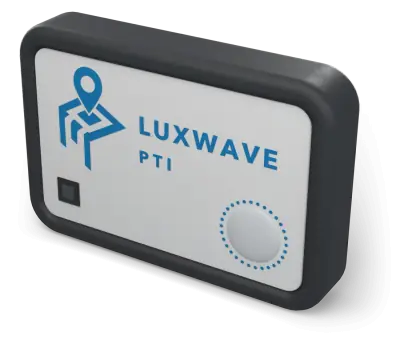
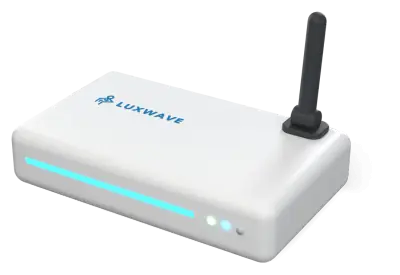
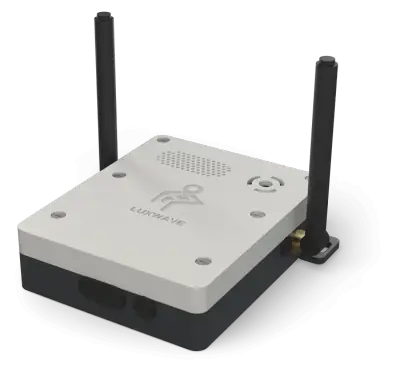 On demonstrationPoint ServiceIn the luminaire, as a retrofit or in new build. It emits the zone’s address.


Project economics
- Low investmentNo anchors, no data cabling: the Point Service fits inside the luminaire.
- Quick commissioningThe lighting plan is already the zone plan. Nothing to calibrate room by room.
- Very little maintenanceEach Point Service is powered by the lighting.
- Reduced operating costsOne subscription per device, offered by our lighting and integrator partners.
- A fast paybackControlled lighting reduces the energy bill and pays for the infrastructure.
Why?
Every minute counts. So does every metre.
- An alert that gets through wherever there is lightBasements, tunnels, plant rooms: the lighting is already there.
- An address, not an areaResponders know where to go before they set off.
- A verified alertAlarm verification by voice rules out a false alarm before emergency responders are mobilised.
- No camerasYour monitoring view shows zones and events, not images.
1 in 2
More than one in two deaths from workplace accidents follows a sudden illness. With no witness, everything depends on the alert time and how precisely the person is located.
Source: Assurance Maladie – Risques professionnels, 2024 annual report. Figure published by a third party, not a LUXWAVE result.- Alert time
- Responder arrival time
- Alerts resolved on site
- Zones covered
Sectors
Protect, sector by sector.
- Industry and energyPlant rooms, tunnels, night shifts.
- Mining and undergroundUnderground, beyond the reach of the mobile network.
- HealthcareNight staff, basements, storerooms.
- LogisticsA forklift driver alone in a high-bay aisle or a cold store.
- Buildings and infrastructureCleaning, maintenance and security staff, alone in the evening.
Other uses: LocateGuideCertifySave energy
What next?
See the light at work.
A demonstration on site or remotely, based on your lighting plans.